
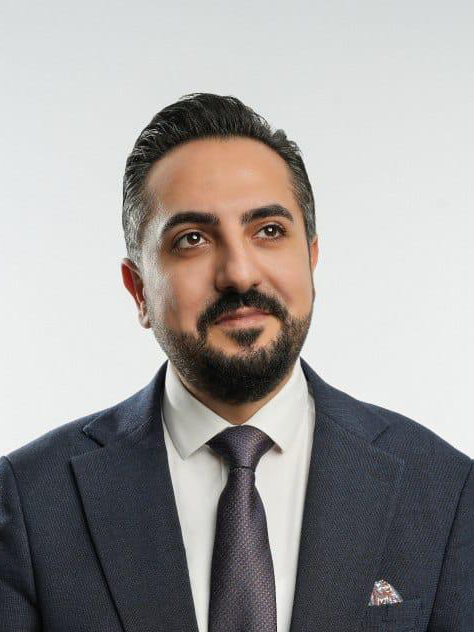
Author: Mustafa BAŞAR
Management Consultant
Women in Management – 2: Human and Humankind
Like many people, I have assumed more than one role in this brief life. One of them is being a father. Yes, I am a father, and the father of four sons. Let me say at the outset that I mention this not with pride, but rather with a sense of humble acceptance: unfortunately, I was never blessed with a daughter. It seems that this was the will of the Creator. I truly would have wished for my dear wife ‘not to be the only woman’ in our home, in our nuclear family. In my previous article, I stated that throughout different historical periods and cultures, women have consistently stood out as symbols of justice, freedom, balance and homeland. Naturally, someone who makes such a historical observation might also wish for a more balanced demographic structure within their own household.
Men like me who grew up with sisters often develop an egalitarian and inclusive mindset at an early age. Of course, family culture and parental behavior are also decisive factors. I consider myself fortunate: together with my brothers, my sister and my elder sister, we were raised with equal love and attention from our parents. For this very reason, I would have wished for my sons to grow up under similar circumstances. Nevertheless, together with my dear wife, we are doing everything in our power to raise our children as inclusive-minded, healthy and ethical individuals. In fact, all my sons realized at a very early age that their mother clearly surpasses their father in many areas! Everyone has roles in which they excel. What truly matters is being able to contribute, add value and support one another, starting with those closest to us. I remember it as if it were yesterday. Years ago, while watching the film Hacivat Karagöz Neden Öldürüldü? at home with my wife and our then only child, our five-year-old son was astonished by the female warriors called “Bacılar,” whose leader in the film was portrayed by Şebnem Dönmez. “Were there female warriors in the Ottoman Empire?” he asked. We replied that indeed there were many examples of female warriors and female leaders throughout different stages of Turkish history. Yet we could not answer his second question: “What happened to them? Where are they now?” I recommend the same research that my wife and I once undertook: look into the Anatolian Women’s Organization known as Bâciyân-ı Rûm, often described as a community of female dervishes and read about how they quietly disappeared from the stage of history.
Across different geographies and eras, there are countless examples of battles and wars in which ‘women’s active participation determined the outcome.’ The French Revolution, for instance, would not have succeeded without the mass mobilization of women as a powerful social force. A decisive turning point occurred on October 5, 1789, when Parisian women marched to the Palace of Versailles to protest high bread prices. Their action forced King Louis XVI to return to Paris — an event that altered the course of French history and encouraged the broader population to challenge authority.
Another major revolution, the Haitian Revolution, remains the only successful large-scale uprising against slavery. Black female slaves played active roles not only in armed resistance but also in intelligence, logistics and organization. One notable figure was Sanité Bélair, who fought as a commander against French forces and remained defiant even in the face of her execution, becoming a symbol of the struggle for freedom. How did the Soviet Union manage to establish superiority over Nazi Germany during World War II? Unlike the Nazis, they mobilized as an entire nation, women and men together. Two striking examples illustrate this. The first is the 588th Night Bomber Regiment, famously known as the “Night Witches,” composed entirely of female pilots who carried out highly successful bombing missions against Nazi targets. The second is Lyudmila Pavlichenko, ‘one of the most successful snipers in history’, credited with eliminating 309 enemy soldiers. Yet Hollywood films l chose to highlight another sniper of the same era, Vasily Zaytsev, making him a far more famous figure. A comparison of their records is quite revealing. Similarly, both the Vietnam War and the Turkish War of Independence share a common feature: invading forces attacked with male armies, yet they were ultimately defeated by societies in which women and men resisted together. In our own National Struggle, numerous women played vital roles. Figures such as Kara Fatma, Halime Çavuş, Rahime Hatun, Hafız Selman İzbeli, Gördesli Makbule, Çete Ayşe, Nezahat Onbaşı and Kılavuz Hatice stand out. Many fought directly on the front lines, while countless others carried ammunition, weapons and supplies behind the front — especially along the İnebolu–Kastamonu–Ankara route using ox-drawn carts. Among them, Şerife Bacı became the symbol of sacrifice after freezing to death while transporting ammunition under harsh winter conditions, yet the ammunition she carried was successfully delivered. Halide Edib Adıvar played a crucial role in organizing, raising awareness and conducting propaganda efforts among the people as both a writer and an activist, while also serving on the front lines. There is, of course, a reason why I have spoken so much about warfare. The profession in which gender inequality is perhaps most visibly observed is the military itself. Among more than 200 countries in the world today, only North Korea, Israel, Eritrea and Norway require compulsory military service for women. The first three do so largely out of necessity, due to security threats and limited human resources. Norway however, implements this policy as part of its genuine commitment to equality and inclusion.
Have you ever heard of Rosa Parks? Under segregation laws in the United States, the front seats of buses were reserved for white passengers, while black passengers were required to sit at the back. If the standing passengers were white, the driver moved the ‘colored’ sign separating the seats occupied by blacks and whites to the rear of the bus. If there was no room in the back for black people, they had to stand; if there was no room to stand, they had to get off the bus and wait at the stop for the next one! The state law also did not allow black and white passengers to sit side by side on the same seat. Rosa Parks was a brave woman who defied this law! On December 1, 1955, Rosa Parks refused to give up her seat to a white passenger. When asked why she would not stand, she replied: “I do not believe I should have to give up my seat.” Resulting in the driver calling the police and she was arrested for ‘disturbing public order’. Within a couple of days, her arrest sparked a boycott involving more than 40,000 people, including many white citizens who walked to work instead of riding buses. Faced with growing public pressure, the state gradually reformed its laws to become ‘more inclusive and equitable’. Rosa Parks later received the Congressional Gold Medal in 1999. Had this courageous woman who died on October 24, 2005 not taken that stand, the United States could still have been enforcing its racist laws. Yet according to the World Economic Forum, even in the United States, a country often portrayed as a land of freedom and equality, under current conditions it may take another 200 years for full gender equality to be achieved. Consider what that might mean for the rest of the world. Should humanity truly wait that long? To cope with the growing challenges of our world and our lives, we need the ‘representation of everyone in society and the full utilization of all talents.’ Women must have greater representation in the highest decision-making bodies of companies, the institutions that shape and guide our economies. It is easy to say that “Life is Shared.” The real challenge is living in a way that does not contradict this truth. I have a friend who owns a very large company and whom I know is extremely devoted to his daughter and deeply adores her. This friend of mine, who loves his daughter very much and has sons, says that “after his only daughter was born, he understood what it meant to be a father.” Yet when appointing executives for his company’s top management, he chooses only men. When I once asked him why, he answered honestly: “I communicate more comfortably with men. I can give them clear instructions. I am afraid that I cannot act authoritatively toward women in the workplace, thus harming my business.” Sadly, this absurd mindset exists not only in Türkiye but in many parts of the world, particularly in Eastern societies. According to a 2023 report by Deloitte, women hold approximately 20% of board seats worldwide. The 2023 Gender Equality Index by Equileap found that women make up around 30% of leadership positions among the world’s largest companies. In Japan, despite its remarkable technological advancement, the figure is only about 10%.
For Türkiye to rise and succeed economically, we must fully utilize our most valuable resource: human capital. As we approach the midpoint of the 21st century, neither my reason nor my conscience can accept that even highly educated and influential decision-makers continue to hold views that contradict gender equality. There is no need to prolong the discussion further. For those who insist on defining the difference between women and men, the late master Neşet Ertaş already expressed it perfectly: “Women are human beings. We men are merely humankind.”