
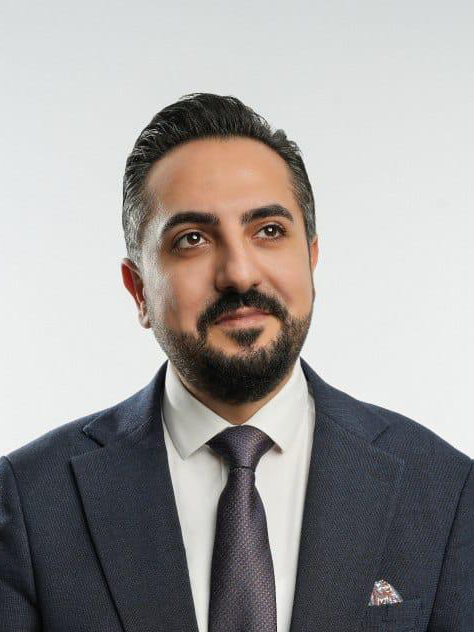
Author: Mustafa BAŞAR
Management Consultant
Business Management Simulation – 1: Historical Background
Recently, our family trip to Egypt turned out to be highly educational for my spouse, our children and myself. We are not the type to spend our vacation locked in an all-inclusive hotel, sunbathing and swimming from morning until evening. Instead, we find that the more physically active we are and the more new things we learn during our limited vacation time, the more mentally refreshed we feel. For those who wish to rest both mentally and spiritually, I recommend the same approach: use your vacation time, within your means, to ‘gain as many new experiences’ as possible.
The level of technology and level of civilization are not the same thing.
Ancient Egyptian history is particularly significant because this civilization built the only surviving monument among the Seven Wonders of the Ancient World. The Great Pyramid of Khufu (also known as the Pyramid of Cheops or simply the Great Pyramid) is the oldest and largest of the three monumental pyramids located in the Giza necropolis, which today lies within the greater metropolitan area of Cairo. Believed to have been built around 2551–2560 BCE, this extraordinary structure has inspired hundreds of documentaries and countless theories about its construction, some even suggesting extraterrestrial assistance. Human beings are remarkably imaginative when confronted with a ‘mysterious’ phenomenon they cannot fully understand or explain, aren’t they? Over 4,500 years have passed and few technological artifacts from that period remain. This often leads people to mistakenly equate our current technological level with a higher level of civilization. But are technology and civilization the same thing? Are they always parallel? I firmly believe they are not. In fact, the intellectual level of people in ancient civilizations, their approaches to democracy, and their use of herbal and natural remedies for diseases can be astonishing. Sometimes I ask myself: how did humanity regress in some areas when we should have advanced?
The key to the “construction secret” of the Great Pyramid and Ancient Egyptian civilization, regarded for millennia as the largest man-made structure, lies in small-scale architectural models found among burial artifacts. Initially thought to be toys, these models were in fact evidence that miniature replicas were used in city planning and architectural projects. Some were at 1:100 scale, others at 1:500, simulating temples, tombs, and pyramids to guide construction. In other words, the “first known simulation in history” was practiced in Ancient Egypt: scale models of buildings, sometimes used to study the impact of Nile floods, allowing iterative trials and exercises that led to successful construction and agricultural planning.
The First Known Medical Simulator: Resusci Anne
Over the millennia, civilizations in Mesopotamia, China, and other regions developed various simulations for agriculture, war strategies and games like Go (Weiqi). During the Renaissance in the 15th century, Leonardo da Vinci built mechanical models and prototypes to understand how machines and gears worked. These physical models were essentially early engineering simulations used to study motion, force, and mechanical interaction. In the 17th century, Isaac Newton developed mathematical simulations using the laws of motion and universal gravitation to predict planetary movement and marked a major turning point in astrophysics. In the field of medicine, however, the first widely recognized simulator appeared surprisingly recently. In 1960, Norwegian toy maker Asmund S. Laerdal produced the Resusci Anne mannequin for CPR and artificial respiration training. Laerdal had previously worked mainly with wooden toys but quickly adapted his factory to plastic manufacturing. Concerned that male students might hesitate to practice mouth-to-mouth on a male mannequin, he chose a female face. The question then became: whose face should be used?
While researching how to avoid potential copyright and inheritance issues, Laerdal discovered a face mask made from the corpse of an unidentified young woman who had drowned in the Seine River in Paris decades earlier, which had been preserved during autopsy procedures. After completing the necessary arrangements, Laerdal reproduced this mask and used it as the facial model for the training mannequin. Thus, L’Inconnue de la Seine “The Unknown Woman of the Seine” became the face of Resusci Anne, eventually earning the nickname “the most kissed girl in history.” Setting aside the humorous aspect, thanks to Annie (as students affectionately call her), millions of lives have been saved through CPR training. This simulator has played a vital role in medical training: thanks to CPR instruction using “Annie,” as students affectionately call the mannequin, millions of lives have been saved. Popular culture often emerges from unexpected intersections of different fields. During CPR training, students and healthcare professionals developed a habit of periodically pausing their practice to check the simulated patient, asking loudly:
“Annie, are you okay? Are you okay, Annie?”
This phrase became so recognizable, particularly in the United States, that it eventually inspired American singer/songwriter Michael Jackson to use it in his song Smooth Criminal.
As Mustafa Kemal ATATÜRK once said: “Before disaster strikes, preventive measures must be considered, because regretting after the fact serves no purpose.” To simulate means to recreate an event or situation as if it were real, essentially a type of exercise or drill. In the next part of this series, we will explore simulations and simulators that have shaped the 20th and 21st centuries and discuss the various applications and training methods worldwide and in Türkiye that are particularly in leadership training and executive decision-making for corporate management.