
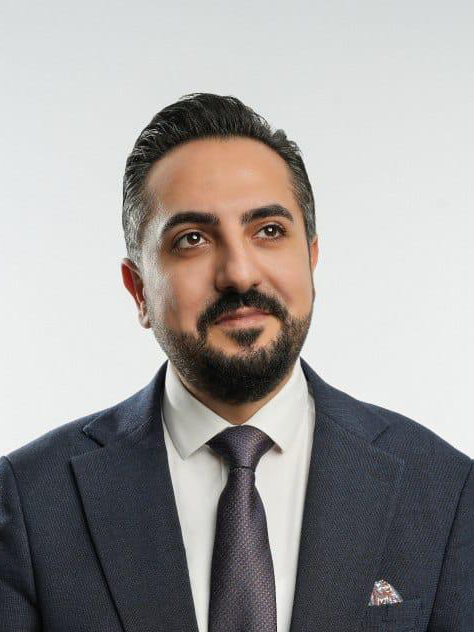
Author: Mustafa BAŞAR
Management Consultant
Like a “Swiss Army Knife”
As a family, we often watch Yeşilçam films because we love them. I believe many people in Türkiye share our feelings; old Turkish movies have a unique texture and flavor unlike any other type of cinema. They are warmer, more sincere. If they weren’t, how could we watch the same films over and over again, knowing almost every scene and line by heart? Recently, films reminiscent of old Yeşilçam movies have also been made. One of the few standout actors in these films is Ata Demirer. In a movie where he plays a street vendor of çiğ köfte, he finds himself in trouble in Istanbul and ends up in Gökçeada. Arriving unplanned, it’s the off-season for tourism, and while looking for work, he introduces himself to the owners of a seaside business, saying: “I’m a man like a Swiss Army Knife!” At that moment, my children simultaneously asked me and their mother: “What does it mean to be like a Swiss Army Knife?” As parents, we paused the movie and tried to explain that although it is literally a knife produced in Switzerland, in our language it has become a metaphorical expression. It is similar to idioms in our culture such as “having ten skills in ten fingers” (being jack of all trades) meaning someone who is highly versatile and capable in many areas. But then I realized my children have never seen a Swiss Army Knife in their lives; it’s normal they hadn’t heard of it. Then I wondered: when was the last time I saw or heard one? And how would we answer their second question: why didn’t he say, “I’m like a Turkish knife?”
Places like Sürmene in Trabzon, Kestel in Bursa, Yatağan in Denizli and even Sivas, Gaziantep and Şanlıurfa… Do you know what they have in common? For centuries, these regions have produced high-quality knives of different types. Kestel in Bursa, which was the Ottoman capital and Sivas are among the oldest traditional knife-making centers. Even before the Ottomans, during the Anatolian Seljuk period, these regions produced highly durable steel knives for various purposes. Of course, handmade knives and swords were produced around many places in the world, but as in any field, standing out globally required innovation and adding unique features to an existing product.
This is exactly what Karl Elsener achieved in 1891. He began his career as an apprentice in a blacksmith workshop. Through discipline and hard work, he became a skilled craftsman and at only 24 years old in 1884, opened a factory producing surgical instruments and knives. His high-quality work quickly drew the attention of national authorities. As the Swiss Army required a multipurpose tool for soldiers to prepare food (can opener, knife, etc.) and maintain weapons (especially by loosening screws), he launched the “Soldier’s Knife” in 1891. This military tool paved the way for what would eventually become known as the Swiss Army Knife. Elsener introduced an improved version, the “Offiziersmesser” (Officer’s Knife), in 1897 which is considered the official birth of the “Swiss Army Knife.” He combined his beloved mother’s name Victoria, with the term “inox” (stainless steel) to name his company and brand “Victorinox” which remains the first brand that comes to mind today when one thinks of a Swiss Army Knife. Early models already combined multiple tools; knife, screwdriver, scissors, can opener and wrench. Over time, Victorinox included additional tools such as USB drives, laser pointers, compasses, magnifying glasses and even digital displays. For an army concerned with limiting the weight soldiers carry, Victorinox met a real need by producing remarkable innovative products. Over the years, many armed forces, particularly NATO members, purchased Swiss Army Knives for their soldiers and even commissioned special orders requesting customized versions for themselves.
In 2005, Whitehead Mann, a leadership consulting firm now part of Korn Ferry, published a report titled ‘What Makes a Good Chairman?’. Four years later, said company was acquired by Korn Ferry. Twelve years after that in 2021, the COVID-19 pandemic had spread across the world, profoundly affecting the global business environment. Korn Ferry decided to revise Whitehead Mann’s report to reflect the new tough business realities. Personally, I find myself in strong agreement with their conclusions. Therefore, I would like to outline ten essential qualities that chairpersons and board members should possess in the 21st century.
1- Extensive Board and Beyond Experience
Chairpersons and board members should possess a broad range of experiences that allow them to understand complex challenges and build networks among diverse stakeholders. Experience as a CEO can be valuable but it is insufficient. Strong board leaders often have experience as Non-Executive Directors (NEDs), committee chairs and exposure beyond the traditional corporate world.
2- Intense Curiosity and Openness to Differences
In an environment characterized by rapid change and constant disruption, failing to recognize emerging trends can have catastrophic consequences. Future leaders must exhibit continuous curiosity and awareness to being open to new ideas emerging both as societal and business trends.
3- Resilience, Self-Control, and Character Strength
The turbulent transition of the 2020s continues. While another global pandemic may be unlikely, other crises are almost inevitable. Effective leaders must therefore be resilient, principled and willing to confront difficult challenges. The ability to draw lessons from past crises is critically important.
4- Emotional Intelligence and Strong Communication Skills
Modern chairpersons must engage with a broader and more diverse group of stakeholders. Effective communication and listening skills are essential for building strong internal and external relationships while ensuring that board members and senior executives feel valued.
5- Humility and Openness to Personal Growth
‘Arrogant, distant leaders’ are no longer acceptable or tolerated. Future leaders must be capable of admitting mistakes, learn from them and cultivate a culture of learning. They should share concrete examples of personal growth and instill a culture of learning to their environment.
6- Mental Agility and Intellectual Strength
Humility does not mean intellectual weakness. Future chairpersons must be mentally agile and intellectually robust, capable of anticipating change and respond rapidly.
7- Collaborative Mindset and Appreciation of Partnerships
A strong partnership between the Chairperson and the CEO is one of the cornerstones of effective leadership. Successful chairpersons support and encourage CEOs, provide guidance when necessary, challenge decisions when appropriate and if required do not hesitate to initiate leadership change.
8- Sense of Purpose
The way companies and boards are perceived has been changing profoundly. Leaders must act not only for profit but also with responsibility toward people, the planet and broader societal values. They must communicate an authentic and clearly defined purpose to stakeholders.
9- Digital Awareness and Competence
Technology is transforming every aspect of life and business. Board members and chairpersons do not need to be technical experts, but they must genuinely understand technological trends and their implications. They must also collaborate effectively with digital specialists and Pioneer technological transformation.
10- Full Commitment and Engagement
Board leadership should no longer be viewed as part-time responsibility. Future chairpersons must ensure that boards remain agile and effective, challenge CEOs more rigorously than ever before and even step into executive roles when necessary. This is not a light transitional role before retirement, it requires serious time, dedication and engagement.
In the film we watched as a family, the character portrayed by Ata Demirer, by saying “I’m a man like a Swiss Army Knife” in a job interview, communicated that don’t see me merely as someone who prepares food, I have the skills and experience to assume multiple roles that could contribute to business growth and development. As I often emphasize on various platforms, the most important step toward institutionalization is meritocracy. Entrusting the right people with the right responsibilities is perhaps the simplest yet most effective method for achieving sustainable organizational growth. Having a board composed of versatile members is of strategic importance for the future and resilience of any company. Board members who can, when necessary, roll up their sleeves and step into crucial operational areas such as finance, human resources, production, export, marketing or procurement, provide the organization with invaluable strength and flexibility.